
About Mahinaz Elmessiry
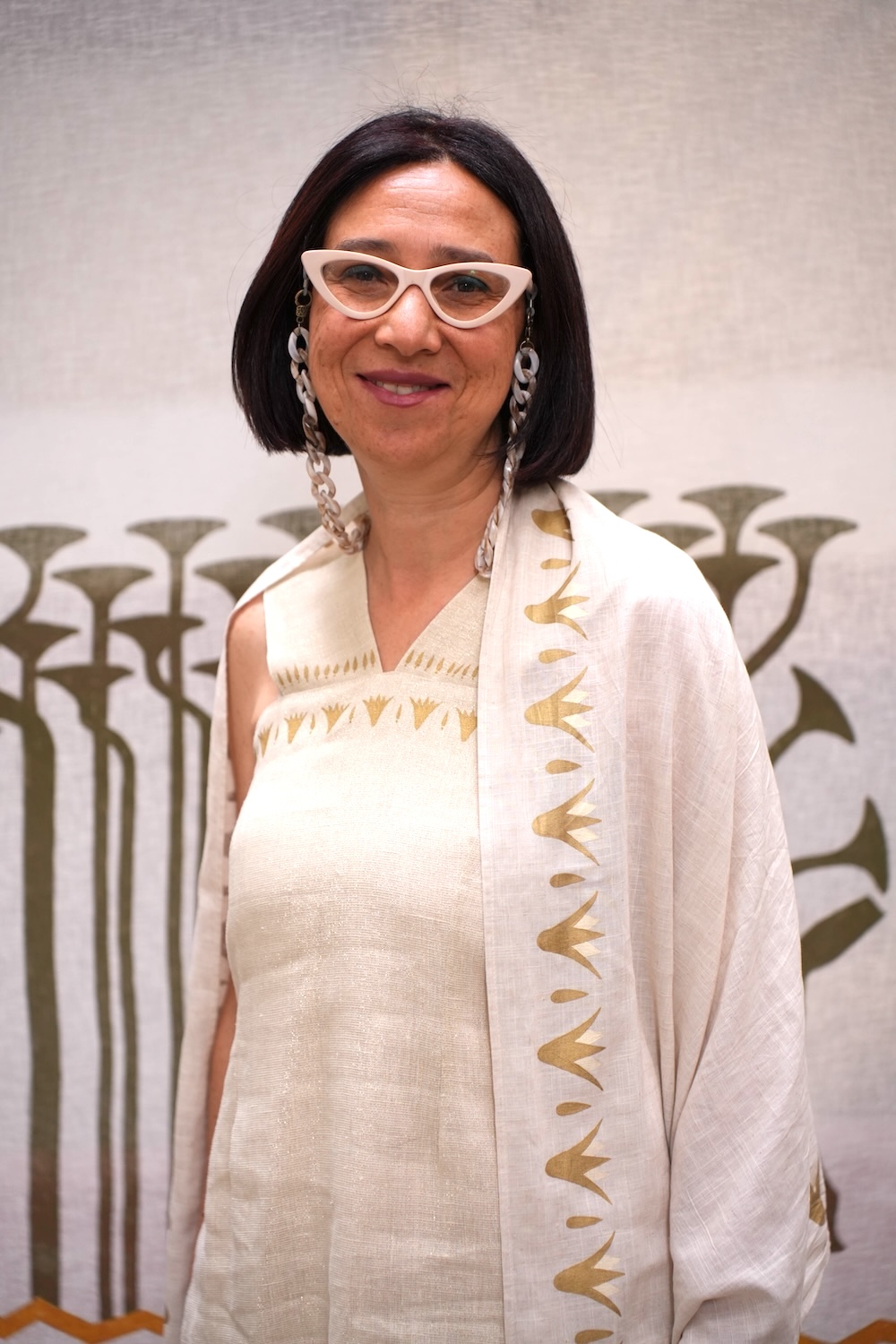
Mahinaz Elmessiry is a multidisciplinary designer whose work is deeply rooted in the rich visual and cultural heritage of Egypt. Through extensive research and field study, she has developed collections that celebrate the diversity of Egyptian identity, including the Siwa Collection, the Nubian Collections, the Falaheen Collection, and the Ancient Egyptian Collection. Together, these bodies of work encompass over one hundred meticulously crafted products spanning fashion, jewellery, cushions, curtains, bed linens, towels, pottery, lighting, furniture, and scent design.
Her creations go beyond functional objects; each piece carries a narrative of tradition, craftsmanship, and a living connection to Egyptian roots. Mahinaz has presented her collections internationally, delivering lectures on cultural heritage and sharing the research and inspiration behind her work.
Her expertise extends beyond product and collectible design into spatial and experiential projects. She has contributed her creative vision to homes, dahabeyas (traditional Egyptian sailing boats), and cruise experiences, transforming spaces through a contemporary interpretation of Egypt’s artistic legacy. Among her notable achievements is the Aten Collection, an exclusive series of official golden Egyptian pounds inspired by Ancient Egyptian symbolism, where heritage meets refined artistry.
Alongside her design career, Mahinaz Elmessiry has dedicated over seventeen years to social impact and sustainable development. Through workshops in orphanages and initiatives supporting homeless children, she has used design as a tool for empowerment and education. In collaboration with institutions such as the Ministry of Communication, the National Council for Women, the Ministry of Tourism, and multiple USAID-supported projects, she has trained artisans across Egypt—helping them establish independent brands, refine their craft, and adopt global standards of design and quality.
Her work with artisans is grounded in sustainability and ethical practice. By promoting eco-friendly materials, traditional techniques, and fair labour standards, she ensures that each collaboration contributes to the long-term social and economic well-being of artisan communities. Her approach reconciles cultural preservation with contemporary production, creating a lasting balance between heritage and innovation.